Pages

Showing posts with label Tiananmen. Show all posts

Wednesday, 20 June 2012

New Mainland editor at SCMP chief censor for China?

Journalistic ethics questioned at SCMP
So why was Li Wangyang’s suicide not news?

“I don’t have to explain to you anything. I made the decision and I stand by it. If you don't like it, you know what to do". That was how SCMP's new Beijing editor Wang replied Alex Price, a sub-editor at the paper.
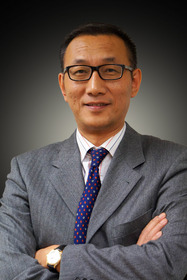
Wang Xiangwei
the new mandarin at SCMP

The ‘suicide’ of Tiananmen dissident Li Wangyang under suspicious circumstances in a Hunan hospital, was reported by the Post’s own China staff in its first edition. Editor Wang returned to the office between editions to reduce it to a ‘brief’ buried in the inside pages. Alex Price asked why? Now he fears for his job. Alex circulated the intimidating e-mail exchange to his colleagues in the newsroom and elsewhere.

Li Wangyang’s suicide came days after he spoke to a Hong Kong TV channel, recounting two decades of harsh imprisonment and torture which left his sight and hearing severely damaged. Hong Kong politicians, including York Chow, secretary for food and health, have questioned why a frail man who survived relentless torture for so long, would suddenly decide to hang himself - or even have the strength to do so.
Too many detainees in China's notoriously medieval political gulags have been 'suicided'. 


Many pro-Beijing comrades in Hong Kong have also uncharacteristically raised their voices asking for full investigation and disclosure. This is an election year in Hong Kong for expanded Legislative Council seats, due September 9.

Emotions in Hong Kong are running high on Beijing’s unrectified verdict on the Tiananmen students. The pro-Beijing parties fear there could be a backlash. There was a record turnout of 180,000 people for the June 4 anniversary vigil in Victoria Park. The march that erupted on June 10 after the suspicious suicide of Li Wangyang, vented more anger against the blatant disregard for human rights in China.

President Hu Jintau is due to visit Hong Kong on July 1 for the 15th anniversary of the handover. The minders at the Hong Kong & Macau Affairs Office and the China Liaison Office are nervous of demonstrations during that high-profile visit.


Xiangwei the final nail in SCMP coffin?

When Xiangwei, a Chinese Peoples Political Consultative Congress (CPPCC) member, was appointed editor-in-chief of Hong Kong’s 110-year paper of record, many industry professionals had misgivings. The more optimistic hoped that the independent journalistic traditions at the century-old paper would prevail over political correctness.

Wang Xiangwei was invited to articulate his intentions for the paper at Hong Kong’s Foreign Correspondents’ Club in April this year. The audience was none the wiser for his talk but Xiangwei pledged to uphold journalistic standards of reporting ‘without fear or favour’. The spin was predictable.

He did say that two months was too short a time to judge his editorship and asked his FCC audience to invite him back in six months. They should. He has a lot to answer for which is depressing for journalism at one of Asia’s long admired English language newspapers.

The sorry journalism at the Straits Times in Singapore, the discredited mainstream media in Malaysia and Burma and the woefully provincial press in Manila, all explain why the SCMP is such a relief to read. For how much longer?

The hiccups which SCMP has gone through with the serial termination of political cartoonists and China reporters continue to reverberate. Is Wang Xiangwei the final nail on the coffin? The spin-doctors at the China Liaison Office (HQ for ‘united front’ activities) could not have wished for a more effective liaison.

More insightful China analysis

It is generally acknowledged that the SCMP’s China news coverage, commentary and analysis is consistently superior to any international newspaper. Is that due to Xiangwei’s access to the inner networks of the PRC government, party and academics?

One comment on the whistle-blowing news site Asia Sentinel from a Wen Yiduo stated:
“Wang Xiangwei makes a zero contribution to the China section, aside from assigning meaningless and stupid stories. Anything good that appears in the China pages is due to the many knowledgeable reporters who cover China. If anything Wang Xiangwei censors news or gets in the way”.

As a CPPCC member at the national level, Xiangwei would not be considered a security risk. He is not categorized as a dissident or Westernized liberal. The bosses in Beijing are quite relaxed about their man in power at the SCMP. His instinct on sensitive issues is ‘reliable’ as the Li Wangyang incident has shown.

After the other Hong Kong papers covered Li Wangyang’s suicide comprehensively, the SCMP joined the queue with strong features, editorials and commentary. Xiangwei obviously looks over his shoulder for cues before treading on sensitive issues.

Editor-in-Chief needs to be a leader too

What is emerging from the SCMP newsroom is that Wang Xiangwei lacks people skills, organizational ability and respect for time. He has been known to confirm appointments with his subordinates which then drift by for hours or days. He is dismissive of subordinates who query his edicts. He does not share his vision for the paper or articulate any clear editorial philosophy for his journalists. His news conference style is not participative.

Like a mandarin in office, he is imperious and aloof. In a creative environment of writers and analysts, that does not sit well. The lack of inspirational leadership in the newsroom is a damper for most who looked forward to the change from its last Singaporean editor-in-chief who served management in gutting the senior echelon.

More Beijing talent from Xiangwei’s network is being appointed to senior positions and Western journalists are feeling unwelcome.

The Malaysian trio who were brought in earlier have departed for a new era of Singaporean chiefs following the appointment of former Singapore foreign minister George Yeo as vice-chairman of Kerry Group (a unit of Kuok Group) from January this year. Kerry Group has a controlling interest in the SCMP.

Replacing western journalists and introducing security department officials into supervisory positions at the Straits Times is well known throughout the industry. The South China Morning Post will have the dubious benefit of this media muzzling expertise from its new advisers.

ENDS

Wednesday, 28 March 2012

No honeymoon for HK chief executive-elect who takes office 1st July

Henry Tang outs CY Leung on 2003 Article 23 protest - State secret revealed live on TV

The Cosa Nostra has a drop-dead principle of “Omerta” – under no circumstances – even threat of death, can a member squeal on the brotherhood. Too many dead bodies, too many factions, too much money, hundreds of lucrative franchises at stake for drugs, money-laundering, arms trafficking, white slavery plus strategic agents planted in police forces and parliaments everywhere.

The obsessively opaque Chinese Communist Party has a similar unforgiving code on State Secrets. The very survival of the party depends on it.

Zhao Ziyang the party secretary-general during the 1989 Tian’anmen crisis was sacked for dissenting on sending tanks to roll over the students. His bigger crime was letting the students know that Old Deng had returned from retirement to take charge and unleash the killing machines.

Zhao had disclosed a State Secret as he tearfully urged the students to vacate the square to avert the impending massacre. “I have come too late” was his lament. Zhao Ziyang was expelled from the party, held under house arrest till death and denied a state funeral.

Henry Tang reveals a State Secret. And goes on vacation

Henry Tang wagged an accusatory finger at CY Leung at the final debate between the CE contenders, for urging riot police action to stop the 2003 public march of over half a million residents against the Article 23 Security Bill. 


Not only did Henry disclose a State Secret - he did so on prime-time TV to a stunned Hong Kong audience.

“I heard what you said with my own ears” thundered Tang, for once transcending his silly public grin. He was genuinely angry and indignant. That sealed his fate with the party bosses in Beijing – and added credence to persistent rumours of CY Leung’s underground communist status and jackboot tendencies.


CY Leung denied that he urged truncheons, tear gas, pepper-spray or water cannons be used on the marchers. Confident that executive council minutes only record points of agreed action and not verbatim accounts, CY even pledged to release relevant minutes to “clear the allegations”.


Tellingly, no one else from that fateful executive council meeting stood up for CY Leung or contradicted Henry Tang.


Tang’s disclosure also panicked Madam Regina Ip, another future CE hopeful, who was secretary for security then and has as much to hide about that shameful incident. She was in charge of the uniformed services waiting for the green light. 


The trouble with Article 23


The Article 23 provisions, which resulted in the biggest demonstration in modern Hong Kong history, would have allowed the banning of any organization banned by Beijing - such as Falun Gong for instance - without the HK government having to conduct an independent investigation. It would have allowed the police to conduct warrantless searches at any time, anywhere, of anybody. A sedition provision would give the government power to decide what constitutes provocative speech - written, spoken or delivered on the Internet. It would be a crime to listen to such speech and fail to report it.


Those subject to the law would have been citizens and all permanent residents - no matter where they reside, in or out of the territory. It would have included people who visited or transited through Hong Kong as well. Those violating Article 23 were potentially subject to life in prison.


Henry Tang must thank fate for being a HK citizen under the “One Country, Two Systems” principle. No gang of secret police kicked down his doors to whisk him away in the dead of night to an undisclosed location to be beaten into signing a ‘confession’ or fed mercury-laced food to kill him slowly. His wife and children are not under constant surveillance. No security cameras spy on him. No police thugs squat in unmarked cars both ends of his street. He cannot be ‘disappeared’. In fact the man is leaving for a vacation break in a huff.


Chief Executive-elect dashes to Central Liaison Office


Perhaps decades of regular visits and coaching at the Central Liaison Office have become a fixed routine for CY Leung. His dash there the day after his selection, went down like a lead balloon. It was unseemly and undignified for Hong Kong’s next leader to be running to shadowy minders at the CLO.


He forgot that he was now the leader-elect of Hong Kong. If the Central Liaison Office folk want to see him, surely they can book an appointment at his office? Was he there to thank them for stealing the election for him? Was he grateful they pressured the Select Committee probing his West Kowloon Centre project indiscretion to delay till after 25th March?


Citizens were left wondering whether CY Leung was their chief executive-elect or Beijing’s under-cover mole. The radio waves, talk shows and press were electrified with denunciations. One columnist in the South China Morning Post warned of the ‘long nightmare’ ahead.


Obligation to pass Article 23?


Of all the priorities on the plate of the incoming chief executive, CY unwisely resurrected the dreaded Article 23 to the top of his agenda. He pledged to consult widely for consensus. The message Hong Kong citizens delivered so unequivocally on 1st July 2003 seems not to have registered.


CY risks provoking a Hong Kong already suspicious, wary and angry at the stage-managed, small-circle election and the blatant interference of the Central Liaison Office apparatchiks. They do not trust him or them. The consensus he will find on Article 23 is that Hong Kong citizens do not want it.


They may be denied universal franchise and have unwanted leaders imposed on them but Hong Kong citizens have shown they will stand up for their first world freedoms.


Article 23 has little relevance for security in the territory. External defence and international relations are mandates of the PRC. Article 23 has all the tools for clamping down on rights and freedoms which distinguish the city from the rest of China and much of Asia.


Chinese scholar Wong Yiu-chong analysed the attempt to insert Article 23 into HK’s Basic Law in the Asia Perspective Journal (Kyungnam University, South Korea) as the “Leninist integration” strategy of steady absorption.


Starting with the lowest approval rating


CY Leung will start his term with the lowest votes for any chief executive over the past three Election Committee cycles and the lowest approval ratings for an incoming chief executive. His approval rating at 35% is less than half what his predecessors Tung Chee-hwa and Donald Tsang started with.


Citizens of Hong Kong indicated their rejection of the farcical CE election exercise and all three candidates, by casting a whopping 55% blank protest vote in the mock election organized by the HKU Public Opinion Poll over the two days preceding the Election Committee voting. Those who picked from the three tallied 17.8% for CY Leung, 16.3% Henry Tang and 11.4% Albert Ho.


Despite the online voting computers being hacked and disabled, 223,000 people from all walks of life switched to the inconvenience of queuing to cast paper votes at 15 stations set up for the purpose. The organizers had only expected about 50,000 participants even for the online exercise! That should give the Beijing bosses pause for thought on how deep feelings run in HK.


CY has to be cognizant of the extremely weak position he is starting from. He has already stumbled badly even before he takes office. He cannot be seen as a stooge of the Central Liaison Office. Whether he is a closet communist is beside the point. That is his problem - not Hong Kong’s.


CY Leung will have no ‘honeymoon’ allowance. He has to grow into a true leader of 7 million pro-active citizens quickly or find it impossible to govern. He is too sharp and too diligent to fail so obviously. He may yet prove his critics wrong. The only trajectory available to him is up!


ENDS